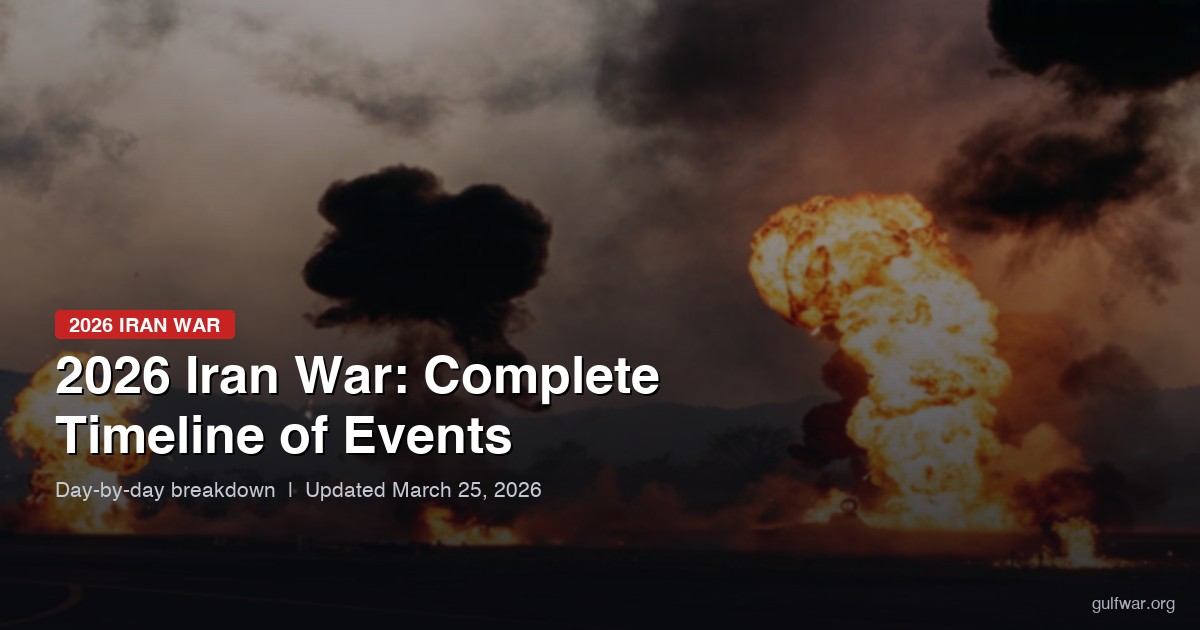
On February 28, 2026, the United States and Israel launched a coordinated series of airstrikes on multiple targets across Iran, marking the beginning of what has become the most significant military conflict in the Persian Gulf since the 2003 Iraq War. This article provides a comprehensive, continuously updated timeline of every major event.
Background: How We Got Here
Tensions between Iran and the Western alliance had been escalating for years. Iran’s nuclear program, its support for proxy forces across the Middle East, and the collapse of the JCPOA nuclear deal all contributed to a deteriorating security situation. By early 2026, intelligence reports indicated Iran was closer than ever to nuclear weapons capability.
Day 1 — February 28, 2026: The Opening Strikes
In the early hours of February 28, US and Israeli forces launched surprise airstrikes targeting Iranian military installations, nuclear facilities, and command centers across the country. The strikes were devastating in their precision and scope.
Among the casualties was Iran’s Supreme Leader Ali Khamenei, along with several senior military commanders. The elimination of Iran’s top leadership sent shockwaves through the region and the world.
Day 2-3 — March 1-2: Iran’s Retaliation Begins
Iran’s response came swiftly and broadly. In an unprecedented move, Iran launched missile and drone strikes not just against Israel and US military bases, but against all six Gulf Cooperation Council (GCC) nations: Saudi Arabia, UAE, Qatar, Kuwait, Bahrain, and Oman.
Explosions were reported across Qatar, UAE, and Kuwait as Iran’s retaliatory strikes hit both military and civilian targets, including airports, hotels, and critical oil infrastructure.
Day 3-7 — The Gulf Engulfed
Saudi Arabia reported intercepting and destroying four ballistic missiles targeting Riyadh, along with a drone attack on an eastern gas facility. In response, Saudi Arabia expelled Iranian diplomatic staff, ordering them to leave within 24 hours.
The Strait of Hormuz — through which roughly 20% of the world’s oil passes daily — was effectively closed to commercial shipping, triggering an immediate global energy crisis.
Week 2-3 — Escalation and International Response
The conflict continued to escalate through March 2026. Gulf states began weighing military options to counter Iran’s ongoing attacks. The closure of the Strait of Hormuz sent oil prices skyrocketing, with analysts warning that routine transit was unlikely to resume for the remainder of 2026.
The international community scrambled to respond, with emergency UN Security Council sessions and diplomatic efforts from multiple nations attempting to broker a ceasefire.
Current Situation (Updated Daily)
As of late March 2026, the conflict remains active. US and Israeli airstrikes continue to target Iranian military assets, while Iran maintains its retaliatory campaign against Gulf state infrastructure and US military positions in the region.
The humanitarian impact has been severe, with civilian casualties mounting on all sides and millions displaced. The economic fallout from the Strait of Hormuz closure continues to reverberate through global markets.
What Happens Next?
Military analysts are divided on the likely trajectory of this conflict. Some predict a prolonged campaign similar to the Afghanistan model, while others believe the elimination of Iranian leadership could lead to internal political changes that accelerate a resolution.
What is certain is that the 2026 Iran War has fundamentally reshaped the geopolitical landscape of the Persian Gulf, with consequences that will be felt for decades to come.
This article is updated daily as events unfold. Last updated: March 25, 2026.