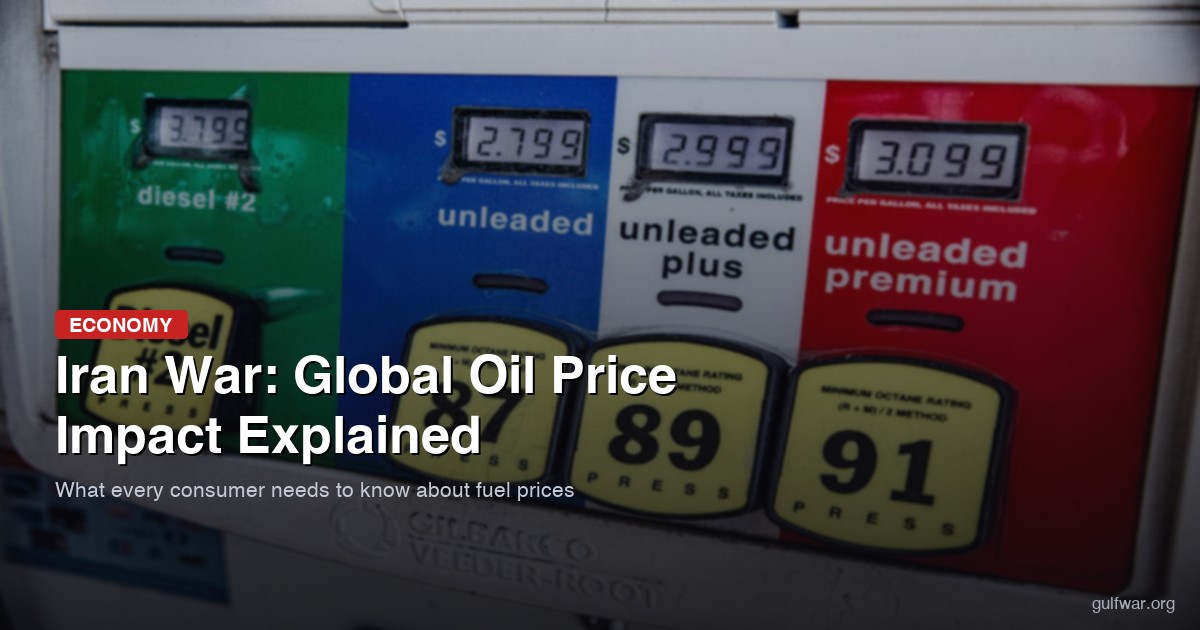
The 2026 Iran War has caused the most dramatic oil price shock in over 50 years. With the Strait of Hormuz effectively closed and Gulf oil infrastructure under attack, consumers worldwide are feeling the pain at the pump and beyond.
Oil Prices Before and After
Before the conflict began on February 28, 2026, Brent crude was trading around $75-80 per barrel. Within the first week of hostilities:
- Brent crude surged past $150 per barrel
- WTI (US benchmark) exceeded $140 per barrel
- Natural gas prices in Europe spiked over 300%
- LNG spot prices in Asia reached record highs
Why This Crisis Is Different
Unlike previous oil shocks, the 2026 crisis involves the physical closure of the world’s most important oil chokepoint. Previous crises , the 1973 Arab oil embargo, the 1979 Iranian Revolution, even the 1990 Gulf War , involved supply disruptions but never a complete blockade of the Strait of Hormuz.
Impact on Gas Prices
For American consumers, the impact has been immediate:
- National average gas price exceeded $7 per gallon
- California and other high-cost states saw prices above $9 per gallon
- Diesel prices , critical for trucking and shipping , rose even faster
- Airlines imposed emergency fuel surcharges on all routes
Beyond the Pump: Everything Gets More Expensive
Oil doesn’t just power cars. It’s the backbone of the modern economy:
- Food prices: Transportation costs drive up grocery bills
- Heating and cooling: Energy bills surge for households
- Manufacturing: Plastics, chemicals, and industrial products all derive from petroleum
- Shipping: Everything delivered by truck or ship costs more
Strategic Petroleum Reserves
The US and other nations have activated their Strategic Petroleum Reserves (SPR) to partially offset supply disruptions. However, the SPR is a temporary measure , it can moderate price spikes but cannot replace ongoing Gulf production for an extended period.
Winners and Losers
Winners:
- US shale producers (domestic production becomes more valuable)
- Russia (higher oil prices despite Western sanctions)
- Renewable energy companies (accelerated transition)
- Electric vehicle manufacturers (demand surge)
Losers:
- Oil-importing nations (India, Japan, South Korea, Europe)
- Airlines and transportation companies
- Consumers everywhere
- Gulf oil producers (can’t export through Hormuz)
How Long Will High Prices Last?
Energy analysts are divided, but most agree that even after hostilities cease, oil prices will remain elevated for 6-12 months as the Strait of Hormuz is cleared and commercial shipping confidence is restored.
Updated: March 25, 2026