The Iraq War began on 20 March 2003 when a United States-led coalition launched an invasion to remove Saddam Hussein from power. What followed was nearly nine years of military presence, an insurgency, and a long political transition. This Iraq War 2003 timeline traces the conflict from the first strikes on Baghdad to the final withdrawal of American forces in December 2011.
How the Invasion Began
Military operations to disarm Iraq started in the early hours of 20 March 2003, local time. According to HISTORY, President George W. Bush announced the opening strikes in a televised address at 10:15 p.m. Eastern Time on 19 March. The stated rationale at the time centered on claims that Iraq held weapons of mass destruction and on links the administration drew to broader security threats. No active stockpiles of such weapons were found after the invasion, a point later documented by official US investigations.
The coalition was led by the United States and Britain, with smaller contingents from Australia and Poland. Forces moved north from Kuwait toward Baghdad. The conventional campaign was fast. As Wikipedia’s account of the 2003 invasion notes, major combat operations lasted just over a month and included roughly 26 days of intense fighting before the capital fell.
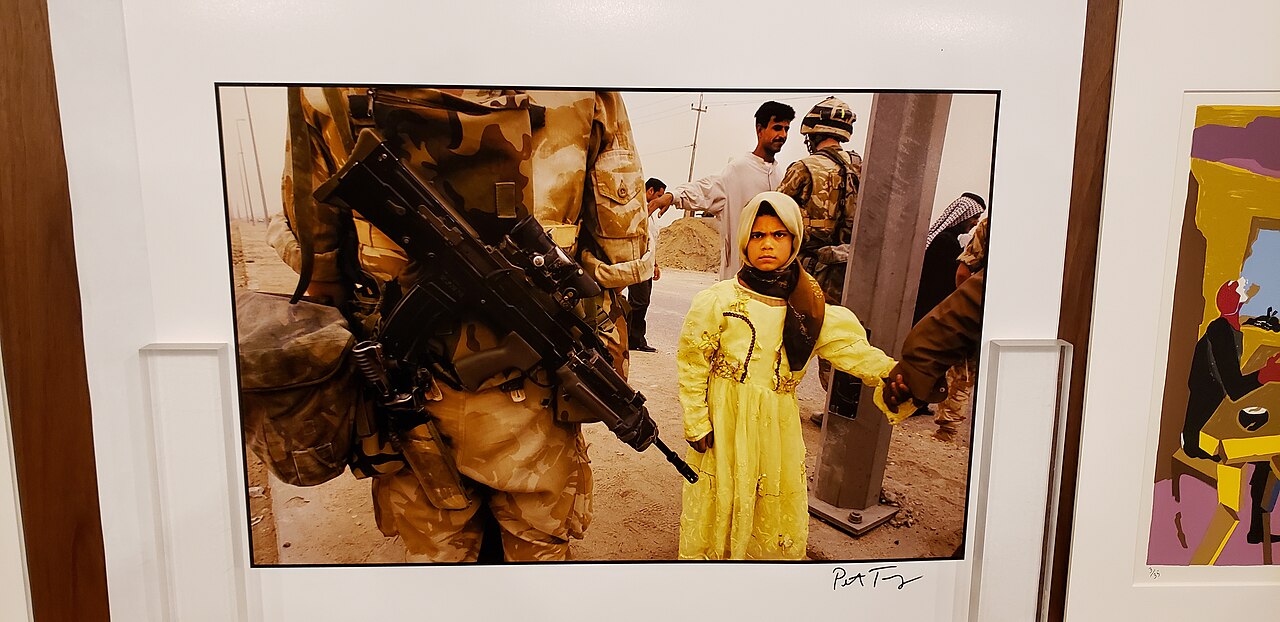
The Fall of Baghdad
Coalition troops reached Baghdad within three weeks. On 9 April 2003, 22 days after the invasion started, the capital was captured following the Battle of Baghdad. Images of a toppled statue of Saddam Hussein in Firdos Square became one of the most recognized scenes of the war. Kirkuk fell on 10 April, and Tikrit, Saddam’s home region, was taken on 15 April.
On 1 May 2003, President Bush declared the end of major combat operations during a speech aboard the USS Abraham Lincoln. The “Mission Accomplished” banner behind him later drew criticism, because organized fighting continued for years afterward. The declaration marked the shift from invasion to occupation rather than the end of the conflict.
Occupation, Insurgency, and Saddam’s Capture
The period after Baghdad’s fall proved far harder than the invasion itself. An insurgency grew, and sectarian violence between Iraqi groups intensified over the following years. Coalition authorities disbanded the Iraqi army and removed members of Saddam’s Baath Party from government, decisions that historians continue to debate.
Saddam Hussein himself remained at large for months. According to HISTORY and Wikipedia, US forces captured him on 13 December 2003 near the town of Ad-Dawr, in an operation codenamed Red Dawn. He was found hiding in a concealed underground space. His trial before the Iraqi Special Tribunal began on 19 October 2005. He was sentenced to death in November 2006 and executed by hanging on 30 December 2006.
Key Events at a Glance
- 19-20 March 2003: Coalition begins the invasion of Iraq.
- 9 April 2003: Baghdad falls to coalition forces.
- 1 May 2003: President Bush declares an end to major combat operations.
- 13 December 2003: Saddam Hussein captured near Ad-Dawr.
- 30 December 2006: Saddam Hussein executed after trial.
- January 2007: Bush announces a troop surge.
- 21 October 2011: President Obama announces a full withdrawal by year’s end.
- 18 December 2011: The last US troops leave Iraq.
The 2007 Surge
By 2006 the security situation had deteriorated sharply. In January 2007, President Bush announced what became known as the surge. According to Britannica and Wikipedia, the plan sent roughly 30,000 additional American personnel to Iraq, including about 20,000 combat troops, to join the more than 130,000 already deployed. The stated goal was to secure Baghdad and reduce sectarian violence.
2007 was one of the deadliest years of the war for US forces. As the year went on, reported violence against coalition troops fell to some of its lowest levels since the early phase of the conflict. Analysts continue to discuss how much of that decline came from the surge itself and how much came from other factors, including Sunni tribal groups turning against insurgents and a temporary ceasefire by some militias.
The US Withdrawal
A bilateral agreement signed between the Bush administration and the Iraqi government set 31 December 2011 as the deadline for a full US withdrawal. On 21 October 2011, President Barack Obama confirmed that all American service members would leave Iraq by the end of the year, after talks on extending the troop presence did not reach agreement. A formal ceremony in Baghdad on 15 December 2011 marked the end of the US mission, and the last troops crossed into Kuwait on 18 December 2011.
The war’s human cost was substantial. According to Britannica, about 4,500 US service members were killed during the conflict. Iraqi civilian and combatant deaths are estimated to have run far higher, though figures vary across sources and remain debated by researchers.
Comparing the Major Phases
| Phase | Approximate Dates | Defining Feature |
|---|---|---|
| Invasion | Mar to May 2003 | Conventional campaign, fall of Baghdad |
| Occupation and insurgency | 2003 to 2006 | Rising violence, Saddam captured and tried |
| Surge | 2007 to 2008 | Troop increase, later decline in violence |
| Drawdown and withdrawal | 2009 to 2011 | Handover to Iraqi forces, US exit |
Frequently Asked Questions
When did the Iraq War start and end?
The invasion began on 20 March 2003. The US combat role formally concluded with the withdrawal of the last American troops on 18 December 2011, ahead of the 31 December deadline set by agreement with Iraq.
Why did the United States invade Iraq in 2003?
The Bush administration cited claims that Iraq possessed weapons of mass destruction and posed a security threat. No active stockpiles of such weapons were found after the invasion, according to later official US investigations.
What happened to Saddam Hussein?
US forces captured him on 13 December 2003. He was tried by the Iraqi Special Tribunal, sentenced to death, and executed by hanging on 30 December 2006.
Closing Note
The 2003 invasion of Iraq was swift, but the war that followed lasted years and reshaped the region. This timeline outlines the documented sequence of events, from the opening strikes to the 2011 withdrawal. Reputable sources including Britannica, the BBC, Reuters, and official US records remain the best starting points for readers who want to study any single chapter in greater depth.
Related Reading
- The 2003 Iraq WMD Intelligence Failure: What Went Wrong
- A History of US-Iran Relations: From 1953 to Today
- US Military Presence in the Persian Gulf: Bases and History
Updated: June 2026. Compiled by the GulfWar.org Editorial Team from public reporting by Reuters, AP, BBC, and Al Jazeera and from published historical records. This article is for informational purposes and does not take political sides.