In the final days of the Gulf War, retreating Iraqi forces set fire to hundreds of oil wells across Kuwait. The blazes turned day into something close to night and left behind one of the largest deliberate environmental disasters on record. This is what happened, why it lasted so long, and what the smoke and spilled oil did to the region.
What Were the Kuwaiti Oil Fires of 1991?
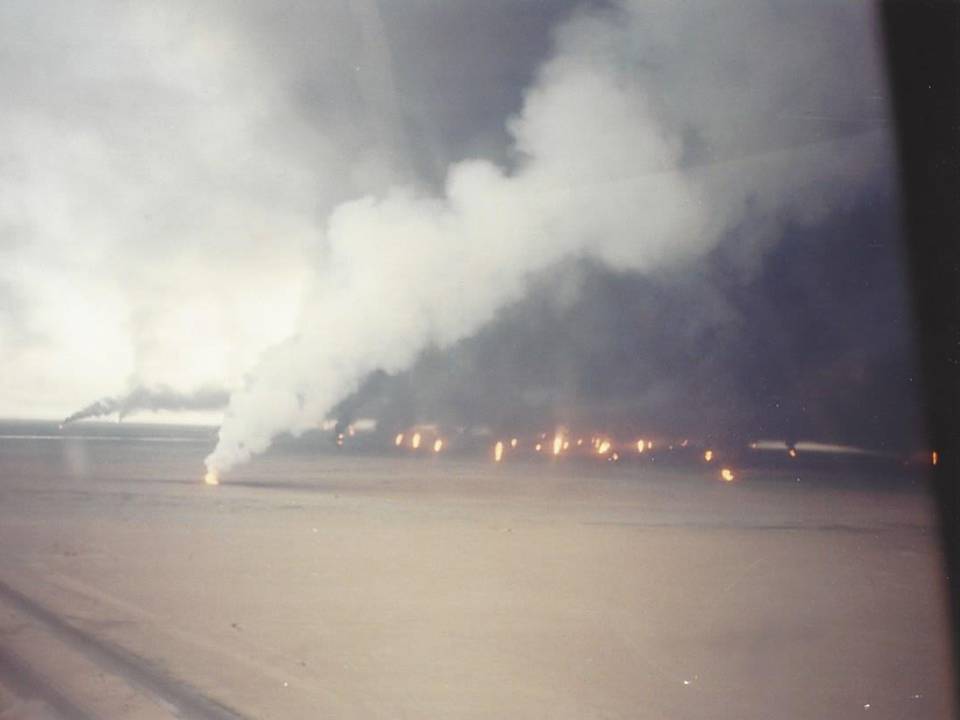
The Kuwaiti oil fires 1991 were a series of well fires deliberately set by Iraqi military forces as they withdrew from Kuwait near the end of the Gulf War. According to Wikipedia’s summary of contemporary reporting and US government records, Iraqi troops damaged or ignited somewhere between 605 and 732 oil wells, along with oil-filled trenches and low-lying pools.
The sabotage formed part of a scorched earth withdrawal. As US-led coalition forces advanced in late February 1991, Iraqi units rigged wellheads with explosives. Satellite imagery detected the first burning wells on February 8, with the largest number of fires concentrated in the final days of the month. The result was an oil-field inferno spread across a country roughly the size of New Jersey.
How the Fires Started
The Gulf War began with coalition air strikes on January 16, 1991, after Iraq had invaded and annexed Kuwait the previous August. The ground campaign to expel Iraqi forces lasted only about four days in late February. During that retreat, Iraqi forces carried out the well demolitions.
Each damaged wellhead released crude oil under natural reservoir pressure, and ignited gas kept many of them burning continuously. The wells that were not on fire were often gushing oil instead, which pooled across the desert. Both outcomes caused serious harm, one through smoke and one through ground contamination.
Key Facts and Timeline
- Wells affected: roughly 605 to 732 oil wells were set ablaze or damaged, per US government and encyclopedic sources.
- First fires detected: satellite imagery picked up burning wells on February 8, 1991, with peak burning in late February.
- Daily oil burned: at the height of the disaster, the burning wellheads consumed an estimated four to six million barrels of crude oil per day, according to figures cited by Wikipedia.
- Total oil burned: commonly estimated at around one billion barrels, close to one percent of Kuwait’s total reserves.
- Oil lakes: Kuwait’s oil minister estimated that 25 to 50 million barrels of unburned oil pooled into roughly 300 oil lakes.
- First fires extinguished: early April 1991.
- Last well capped: November 6, 1991, when the Amir of Kuwait symbolically shut off a final relit well.
The Environmental Impact
The most visible effect was the smoke. Plumes rose to between roughly 10,000 and 20,000 feet, and at the peak the soot absorbed an estimated 75 to 80 percent of the sun’s radiation in affected areas. Reports from the period described daylight reduced to a dim twilight under a super plume of black smoke that stretched for tens of kilometers. Regional temperatures dropped where the smoke was thickest because sunlight could not reach the ground.
The smoke itself contained a mix of soot, sulfur dioxide, nitrogen oxides, carbon monoxide, and other combustion products. On the ground, the unburned oil created a different problem. Pools of crude soaked into the sand, and in places the oil and sand hardened into a crust sometimes called “tarcrete” that covered a meaningful share of Kuwait’s land surface. The oil lakes contaminated tens of millions of tons of soil and threatened groundwater.
The Persian Gulf also took damage, though much of the marine pollution came from separate oil spills during the conflict rather than the well fires alone. Coastal habitats, wetlands, and wildlife in the region were affected by the combined oil contamination.
How the Fires Were Put Out
When the firefighting began, some early estimates suggested the wells could burn for two to five years. The work was finished far faster. Specialist crews from several countries took part, including the well-known American firms Bechtel, the Red Adair Company, Boots and Coots, and Wild Well Control, alongside Canada’s Safety Boss, which capped the largest single share of wells.
Crews used heavy water cannons, explosives to snuff flames by starving them of oxygen, and large volumes of seawater pumped through old oil pipelines. According to figures cited by Wikipedia, the great majority of the fires were eventually controlled using seawater sprayed from high-pressure hoses. The last well was sealed on November 6, 1991. As the Washington Post reported at the time, Kuwait’s Amir, Sheikh Jaber al-Ahmad al-Sabah, marked the occasion by closing a valve on a well that had been relit for the ceremony. Canadian crews were credited with capping that final fire, according to Radio Canada International.
Health Effects and Long-Term Studies
The health consequences have been studied for decades, particularly for Gulf War veterans and the firefighters who worked the wells. International teams began air sampling, monitoring, and health screening in March 1991. According to the US Department of Veterans Affairs War Related Illness and Injury Study Center, research has not shown consistent, definitive long-term health effects directly tied to oil fire smoke exposure, even though concern about it remains part of the wider Gulf War illness research.
US Defense Department records note that the firefighters who worked most closely with the wells, many with about a decade of experience and often without respiratory protection, did not show the symptoms later reported by some veterans and did not record clear long-term effects. Researchers continue to treat the episode as a case study in large-scale pollution exposure.
Frequently Asked Questions
How many oil wells were set on fire in Kuwait in 1991?
Estimates range from about 605 to 732 wells set ablaze or damaged, according to US government and encyclopedic sources. The variation reflects different counts of fully burning wells versus those that were damaged or gushing oil without flame.
How long did the Kuwaiti oil fires burn?
The first fires were started in late February 1991. The earliest were extinguished in early April, and the last well was capped on November 6, 1991. That means the overall effort ran for roughly eight to nine months, far quicker than early predictions of several years.
Who put out the Kuwaiti oil fires?
An international group of specialist firefighting companies handled the work, including Bechtel, the Red Adair Company, Boots and Coots, and Wild Well Control from the United States, and Safety Boss from Canada. They used water cannons, explosives, and large quantities of pumped seawater.
Why the Fires Still Matter
The Kuwaiti oil fires remain a reference point in studies of war’s environmental cost. They showed how quickly deliberate sabotage of energy infrastructure can produce regional pollution, and they also showed that a coordinated international response could end a disaster many had expected to last for years. The smoke cleared within months. The questions about long-term environmental and health effects have kept researchers busy far longer.
Related Reading
- Operation Desert Storm: How the 1991 Coalition Won the Gulf War
- Why Did Iraq Invade Kuwait in 1990? The Causes Explained
- Gulf War 1991: Complete Timeline of Operation Desert Storm
Updated: June 2026. Compiled by the GulfWar.org Editorial Team from public reporting by Reuters, AP, BBC, and Al Jazeera and from published historical records. This article is for informational purposes and does not take political sides.